


How to prepare for the the Children’s Online Privacy Code and Automated Decision Making (ADM) transparency requirements in December 2025
Read more

How to prepare for the the Children’s Online Privacy Code and Automated Decision Making (ADM) transparency requirements in December 2025

Google Drive’s ransomware detection can help stop one bad device from turning into a bigger business problem. Learn how this feature works, where its limits are, and why small businesses still need proper backup, device security, and recovery planning.

Discover how small businesses can use AI safely with a simple usage policy that protects data, reduces risk, and helps teams use AI tools with confidence.

Zoom updated its terms and conditions today, and it’s a doozy. Effective today, Monday, 7th August, establishes the video platform’s right to use customer data to train its AI models, and generally do as they wish with your data!
When you get a privacy-related request from a party that has been on your website or app, here’s what you need to know to respond.
Australian organizations with an annual turnover of less than AUD $3,000,000 must also comply with the Australia Privacy Act – let’s dive in to why.
A recent decision made by the Austrian Data Protection Authority (DPA) ruled that websites that use Google Analytics are not compliant with the General Data Protection Regulation (GDPR).
Terms and conditions are essential to your e-commerce operation, and you cannot sell online without them. You must also abide by the rules of your country, and rules of the country of residence for your customer.
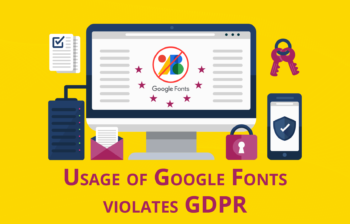
A court in Munich, Germany has recently found that websites that have embedded Google Fonts violate the General Data Protection Regulation (GDPR).
Let’s break down the differences between a Privacy Policy vs. Terms and Conditions and explain why you must have both to protect your users, website, and business.
The truth is that Privacy Policies are changing at an increasingly fast pace and, if you are not keeping up with that pace, you could be putting your business at risk of privacy-related fines and lawsuits
The main rule of displaying a Privacy Policy is that it should be conspicuous to the visitors of your website.
If you look through your emails, chances are that you have received quite a few “we have updated our Privacy Policy” emails lately.